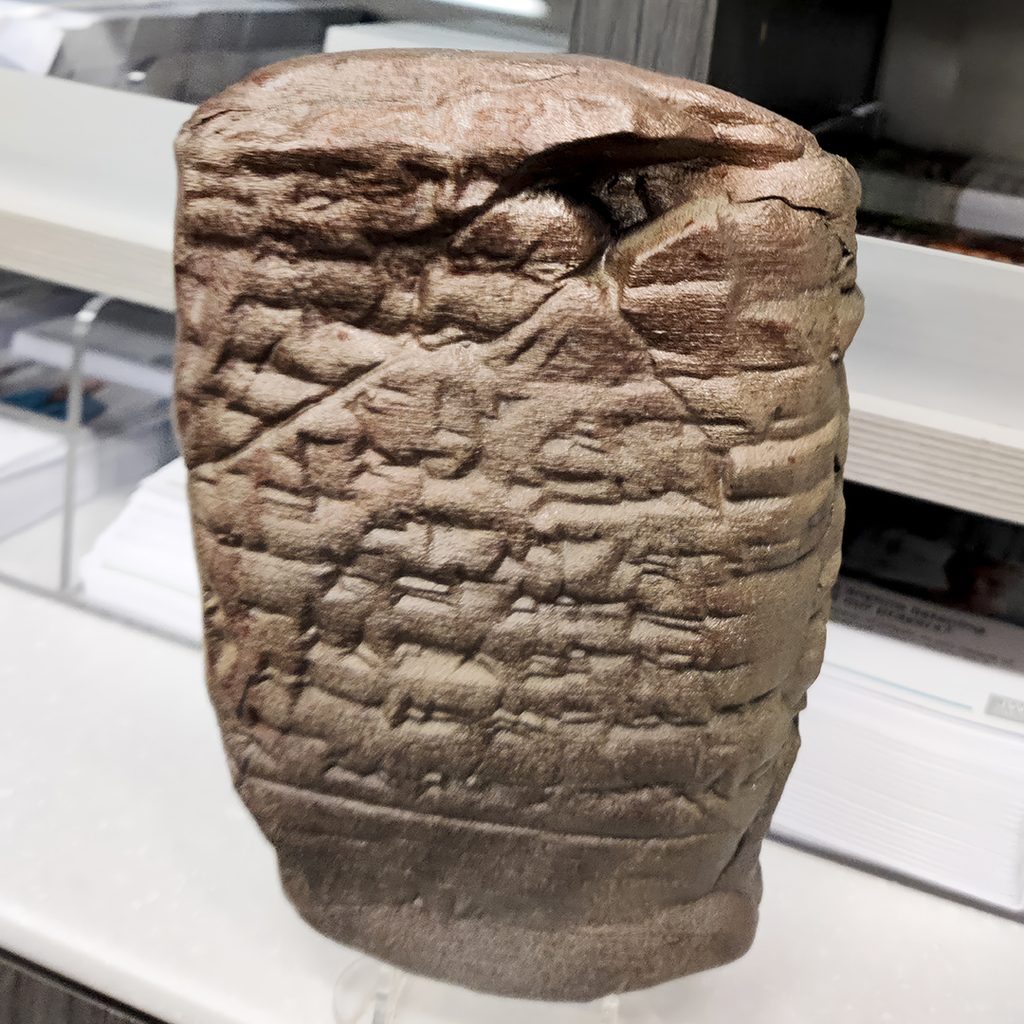
This meticulously crafted digital model of a 15th‑century BCE Hurrian cuneiform tablet from Nuzi (Yorghan Tepe, Iraq) HSS V 51 reveals the legal and familial world that closely parallels the genealogies and narratives of Genesis.
Key Features of the Reconstruction
- High‑fidelity printable 3D Model
- Interactive 3D model: Rotate, zoom, and explore obverse/reverse sides; ideal for classroom use, research, or visual media projects.
Nuzi–Bible Name Parallels
Scholars have noted that many personal names from the Hurrian milieu of Nuzi closely resemble the names of Horite chiefs in Genesis 36:20-27, anchoring that chapter in a real second‑millennium cultural setting. A few striking examples you can highlight alongside the model are:
- Shobal – Šubuli/Šubulu 𒋗 𒁍 𒇷.
- Biblical reference: Genesis 36:20, 23.
- Dishon (Dishan) – Diššan / Tiššennu / Tišana
- Biblical reference: Genesis 36:21, 25, 26, 30.
- Lotan – Lûtanu/Lutan
- Biblical reference: Genesis 36:20, 22.
- Zibeon – Zibianu
- Biblical reference: Genesis 36:2, 14, 24.
- Ezer – Ezira/Izri
- Biblical reference: Genesis 36:21, 27.
Together, these onomastic links show that Genesis 36 preserves genuinely Hurrian‑flavored names consistent with the Nuzi horizon, making this 3D tablet an ideal visual “anchor” for discussions of that genealogy.
The close fit between Nuzi customs and the Hurrian/Horite names in Genesis 36 strongly roots these biblical traditions in the second‑millennium BCE world they claim to describe, rather than in a later, invented setting. The combination of period‑specific legal practices (adoption, “sister‑wife,” inheritance via household gods) and authentic Hurrian onomastics would be extremely difficult for a writer many centuries later to reconstruct with such accuracy, especially before the discovery of the Nuzi archive in modern times.
Rachel and Eliezer
Two other Nuzi tablets help illuminate customs reflected in Genesis:
- Gadd 51 The Adoption Tablet of Nashwi, son of Arshenni, and Wullu, son of Puhishenni records the adoption of Wullu as heir. Wullu was required to provide Nashwi with food and clothing during his lifetime and, after Nashwi’s death, inherit his estate. This legal setting helps explain why Abraham could regard his household servant, Eliezer of Damascus, as his potential heir before Isaac’s birth (Genesis 15:2–4). It is a parallel, not a document about Abraham himself.
- HSS V 67, often called the Nuzi sistership/adoption contract, is regularly cited in discussions of household status, inheritance, and family property at Nuzi. It provides a broader legal context for Rachel’s seizure of Laban’s teraphim—household gods—in Genesis 31:19, 30–35. In some Nuzi-era inheritance arrangements, household gods could be connected with family authority and succession, helping explain why Laban demanded their return. The tablet does not mention Rachel or Laban; it supplies comparative historical background.lib.
Together, these texts show that adoption, inheritance, household authority, and family property were regulated through formal legal practices in the Hurrian world of second-millennium BCE Nuzi. They help modern readers understand the social setting of Genesis, without serving as direct records of biblical characters.
For Educators, Researchers, and Creators
- Integrate the asset into virtual exhibits or 3D‑printed displays to illustrate how real Hurrian documents illuminate biblical genealogies.
For a Nuzi legal or adoption tablet such as HSS V 51, a realistic general size is approximately:
5–10 cm high × 4–9 cm wide × 1.5–2.5 cm thick
overscale it for a good readable printing.